Carpenter's Essential Kit Guide 2026 — Australia
29 tools | 3+1 year warranty | 10–15% below Makita
From timber framing on a new residential build to fit-out work on a kitchen renovation, a carpenter's toolkit needs to handle drilling, cutting, fastening, and sanding — reliably, all day, across hardwood and softwood species. Australian carpenters work with tougher timbers than most markets: Spotted Gum (Janka 11), Blackbutt (Janka 9.1), and treated pine for framing. Crown's 20V brushless platform delivers the torque and speed to handle these materials, with tools that match Makita and Milwaukee on specs but cost 10–15% less. This guide covers every tool in the carpenter's workflow and explains when to use each one.
Hammer Drills — The Workhorse
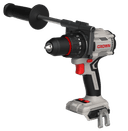
The 20V brushless hammer drill (160Nm torque, 13mm all-metal chuck) is the most-used tool on a carpentry site. It drills pilot holes in hardwood, drives coach screws into LVL beams, and handles masonry anchors into concrete slabs. The two-speed gearbox gives you low-speed/high-torque for large fasteners and high-speed for smaller pilot holes and countersinks. Crown's $179 price tag puts it $20 below Makita's DHP486 ($199) and $70 below Milwaukee's M18FPD30 ($249). The compact 10mm version ($220) suits cabinet makers and second-fix carpenters working in tight kitchen and bathroom spaces where a full-size drill won't fit.
Impact Drivers — Speed Without Fatigue
The impact driver is the carpenter's second most-used tool. Crown's 20V brushless impact driver delivers 260Nm of torque — enough for 100mm batten screws into hardwood without pre-drilling. The impact mechanism absorbs rotational force, so your wrist doesn't take the strain of driving hundreds of screws per day. At $199 (vs Makita $229, Milwaukee $229), it's the best value brushless impact driver launching in Australia. The high-torque variant ($259) handles heavy-duty applications: coach bolts, lag screws, and structural connections where standard impact drivers stall.
Circular Saw — Framing & Sheet Goods (Phase 2, Q3 2026)
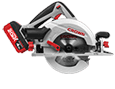
Crown's 20V brushless circular saw cuts up to 56mm at 90 degrees with a 165mm blade — enough for framing timber, decking boards, and sheet goods (plywood, MDF, particleboard). The 4,800 RPM blade speed delivers clean cuts in hardwood without bogging down. The magnesium baseplate keeps weight down for overhead cuts and accurate bevel adjustments from 0 to 50 degrees. At $200 (vs Makita $229, Milwaukee $350), it's the most affordable brushless cordless circular saw in the professional market. Launching in Phase 2 (Q3 2026) — register your interest to be notified.
Jigsaw — Curves, Cutouts & Templates
Kitchen sink cutouts, staircase stringers, curved balustrades, and template work — the jigsaw handles every curved and shaped cut on a carpentry job. Crown's 20V brushless jigsaw ($219) features variable speed, orbital action settings for aggressive or fine cutting, and a toolless blade change. At $30 below Makita's $249 and $81 below Milwaukee's $300, it fills the gap between rough cutting (reciprocating saw) and precision cutting (circular saw) in the carpenter's toolkit.
Reciprocating Saw — Demolition & Rough Cutting
The reciprocating saw is essential for renovation and demolition work: cutting through old timber framing, nailed-in studs, pipe penetrations, and mixed materials (timber + nails). Crown offers two options: the compact recip saw ($219) for confined spaces and one-handed operation, and the full-size brushless recip saw ($289) for heavy demolition with longer blade stroke and higher cutting speed. Both significantly undercut Makita ($249 and $329 respectively).
Brad Nailers — Trim, Architrave & Panelling
Crown's 18-gauge brad nailer ($575) and 2-in-1 brad/staple nailer ($575) handle all finish carpentry fastening: architrave, skirting, window reveals, door jambs, panelling, and built-in cabinetry. Cordless operation means no compressor, no hoses, and no air fittings to maintain — a significant productivity gain on multi-storey and site-spread jobs. The sequential/contact firing mode switch lets you choose precision placement or rapid production nailing. At $575 (vs Makita $659), you save $84 per nailer — and if you run a crew with multiple nailers, the savings compound fast.
Orbital Sander — Pre-Finish Preparation
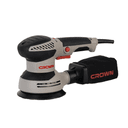
Before staining, oiling, or clear-coating timber, the orbital sander prepares surfaces to a smooth, even finish. Crown's 20V sander ($149) runs at variable speed (7,000–12,000 OPM) for both aggressive material removal and fine finishing. The Velcro pad accepts Crown's sanding discs in 80, 120, 180, and 240 grit. Use 80-grit for rough sanding raw timber, 120-grit for between-coat prep, and 240-grit for final finishing before lacquer or polyurethane. At $149 (vs Makita $175, Milwaukee $250), it's the most affordable brushless cordless sander for professional use.
Rotary Hammer — Concrete Anchoring
New-build carpenters frequently anchor timber to concrete slabs, retaining walls, and masonry: hold-down bolts, slab anchors, and masonry screws. Crown's 20V rotary hammer ($259) delivers 1.9J of impact energy — enough for drilling 6mm to 22mm holes in concrete for Dynabolts, chemical anchors, and throughbolts. The SDS-Plus chuck accepts standard bits, and the three-mode selector (drill, hammer drill, hammer only) covers all applications. At $259 (vs Makita $299, Milwaukee $400), it saves $40–$141 compared to equivalent rotary hammers.
Angle Grinder — Steel & Cleanup
On a building site, the angle grinder handles cutting steel (galvanised posts, lintels, mesh), grinding welds, cleaning rust, and cutting masonry with a diamond blade. Crown's 20V brushless 125mm grinder ($179) has paddle switch, anti-vibration handle, and electronic soft start. At $179 (vs Makita $199, Milwaukee $300), it's the best-value brushless cordless grinder available.
Building a Complete Kit — What to Buy First
For a carpenter starting fresh or switching platforms, here's the recommended build order: (1) Hammer drill + impact driver — covers 80% of daily work ($378 combined, Phase 1). (2) Two 5Ah batteries + dual charger — full-day power ($435, Phase 1). (3) Reciprocating saws — demolition and rough cutting ($219–$289, Phase 1). (4) Brad nailer — finish carpentry ($575, Phase 1). (5) Circular saw — framing and sheet goods ($200, Phase 2, Q3 2026). (6) Jigsaw + orbital sander — curves and finishing ($368, Phase 2). All Phase 1 tools are available at Q2 2026 launch; the circular saw, jigsaw, rotary hammer, and orbital sander follow in Phase 2 (Q3 2026). Register your interest to be notified as each tool becomes available.
Carpenter Tools — Full Range
Power Tools (13)
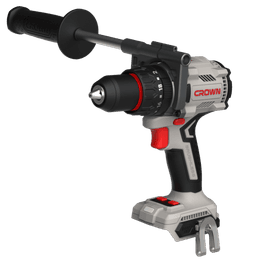
CT21153XMS
20V Brushless Hammer Drill 13mm
$179
CT22067XS
20V Brushless Impact Driver
$199
CT22087XS
20V Brushless Impact Driver (High Torque)
$259
CT25002XS
20V Brushless Circular Saw 165mm
$200
CT28001XS
20V Brushless Rotary Hammer
$259
CT25003XS
20V Brushless Jigsaw
$219
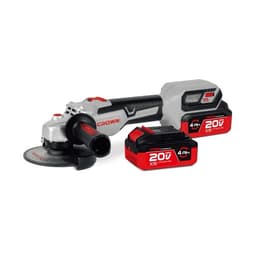
CT23001-125XS
20V Brushless Angle Grinder 125mm
$179
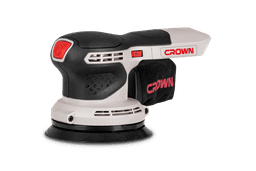
CT23037XS
20V Brushless Orbital Sander 125mm
$149
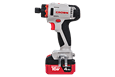
CT61008
20V Brad Nailer 18Ga
$575
CT61013
20V Brad Nailer 2-in-1 18Ga
$575
CT26018HX
20V LED Work Light 2000lm
$129

CT13497-125R
Corded Angle Grinder 125mm
$120

CT42032F
40V Wet/Dry Vacuum 20L
$610
Batteries, Chargers & Consumables (15)

20V 4Ah Battery Pack
$140
20V 5Ah Battery Pack
$140
20V 8Ah Battery Pack
$179

20V Fast Charger
$78
20V Dual-Port Fast Charger
$155
Screwdriver Bit Set 100pc
$87
Hand Saw 400mm
$31
Measuring Tape 10M x 25mm
$39
Sanding Disc 125mm 80-Grit (10pk)
$13
Sanding Disc 125mm 120-Grit (10pk)
$13
HSS Drill Bit Set 13pc
$31
Masonry Drill Bit Set 8pc
$25
Circular Saw Blade 185mm 20T
$25

Vacuum Dust Bags 5pk
$22
HEPA Filter Replacement
$31